Interview with Sridhar Gadhi, MD and Founder and Srikar Chintalagiri, Co-Founder & CEO, AlfredWorks
For EPC and infrastructure companies, fragmented project data can delay critical decisions. Sridhar Gadhi, MD and Founder and Srikar Chintalagiri, Co-Founder & CEO, explains how AlfredWorks connects contracts with project information to identify risks, improve traceability and support faster decision-making across complex construction projects.
What was the genesis of AlfredWorks?
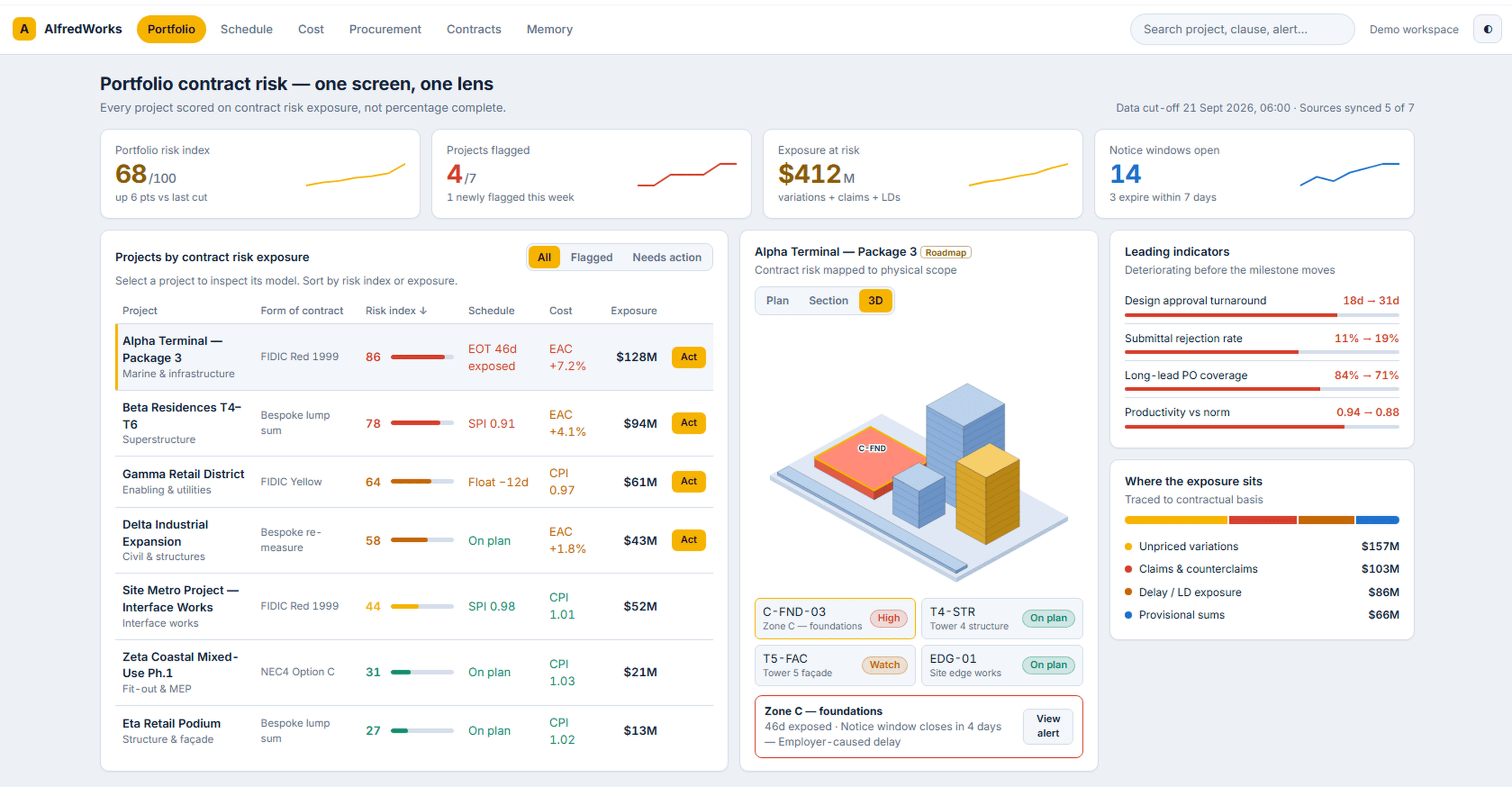
Sridhar Gadhi : AlfredWorks was conceived with the intention of building a platform from India for global construction teams. Globally, 85 per cent of construction projects experience cost overruns, and average claims per project are up to $75 million. AlfredWorks is a deep-tech contract risk intelligence platform powered by a proprietary AI engine that consumes project event streams and data to perform risk simulation and analysis. The goal is to provide project teams with leading indicators, risk indicators and contractual remediation against highlighted risks, helping them identify exposure early.
Where does AlfredWorks fit within the technology ecosystem of EPC and infrastructure companies and what gap does it address beyond existing ERP, scheduling and document-management systems?
Srikar Chintalagiri: AlfredWorks is a system of intelligence that sits on top of existing systems of record such as ERP, scheduling, document-management and project-management platforms. These systems have traditionally remained siloed, with different workflows, owners and data. AlfredWorks connects this information and provides contract-risk intelligence to support faster project decision-making. We place the contract at the centre and provide project context, leading indicators, risk indicators and an audit trail from bidding through to project closeout.
Which organisations are currently using AlfredWorks and where are you seeing the strongest adoption?
SC: We are working with the Energy Department of the Government of Andhra Pradesh, Greenco and Pure Light Energy. The Energy Department is using AlfredWorks to monitor solar projects under PM-KUSUM, while Greenco has started piloting contract-risk intelligence on some of its large projects. We initially thought AlfredWorks would primarily be used by head-office teams. However, site teams have found it extremely useful, particularly for extension-of-time requests, change or variation orders and contractual notices.
What technology enables AlfredWorks to connect contracts with schedules, correspondence and other project data?
SC: AlfredWorks is built around project ontology and a project knowledge graph. We create deterministic relationships between project entities rather than relying only on probabilistic large language models. AlfredWorks absorbs contractual documents and creates a live graph of the project. As events occur across planning, procurement and site progress, the graph is updated and assesses their potential impact on schedules, milestones, the critical path and contractual obligations.
Can you share an instance where AlfredWorks helped a project team address a contractual risk?
SC: On one pilot project in Maharashtra, heavy flooding swept away a project foundation. The team used AlfredWorks to understand its contractual position, identify the relevant clauses and determine that the first action required was to issue a notice. AlfredWorks created the notice using the contract documents and event details. The project manager edited it before sending it and the company was able to avoid a significant penalty.
How is AlfredWorks addressing the industry’s dependence on experienced contract professionals and fragmented project knowledge?
SC: One area we are addressing is construction-contract memory. On long-duration projects, teams change, and the reasons behind earlier delays or decisions can become difficult to trace. AlfredWorks is intended to create continuous project memory and provide traceability across the project lifecycle. The main adoption challenge is not resistance to AI; it is getting enough time and feedback from project teams that are constantly under pressure. We have, therefore, introduced forward-deployed AI engineers who work alongside project managers and planners and feed improvements back to our engineering team.
- PRANJAL PATIL